The Inflammation Epidemic: What hs-CRP Tells You About Your Heart, Your Brain and Your Future

Written By
Healthvizor

Your cholesterol can be normal.
Your blood pressure can be normal.
Your annual health check can come back "all clear."
Meanwhile, chronic inflammation may already be quietly damaging your arteries, your metabolism and your brain. This is silent inflammation, and you won't feel it.
Most annual health checkups in India don't even measure it.
The test costs a few hundred rupees. It's called hs-CRP.
If we could add just one inexpensive biomarker to every annual health check in India, hs-CRP would be near the top of the list. It's one of the most useful early biomarkers we have for cardiometabolic risk, and it deserves consideration in every preventive health assessment.
What hs-CRP actually measures
CRP, C-reactive protein, is produced by your liver whenever your immune system detects inflammation somewhere in the body. The standard CRP test rises with obvious infections and flares. High-sensitivity CRP (hs-CRP) is the same inflammation marker measured at much finer resolution, low enough to detect the quiet, chronic, low-grade inflammation that never shows up as symptoms.
That kind of inflammation is a fire that never fully goes out: a slow drip of immune activation across years. You can't feel it. But it's busy.
What's a normal hs-CRP range?
Most labs read the hs-CRP test like this:
- Under 1.0 mg/L — low cardiovascular risk
- 1.0–3.0 mg/L — average risk
Above 3.0 mg/L — high risk [4]
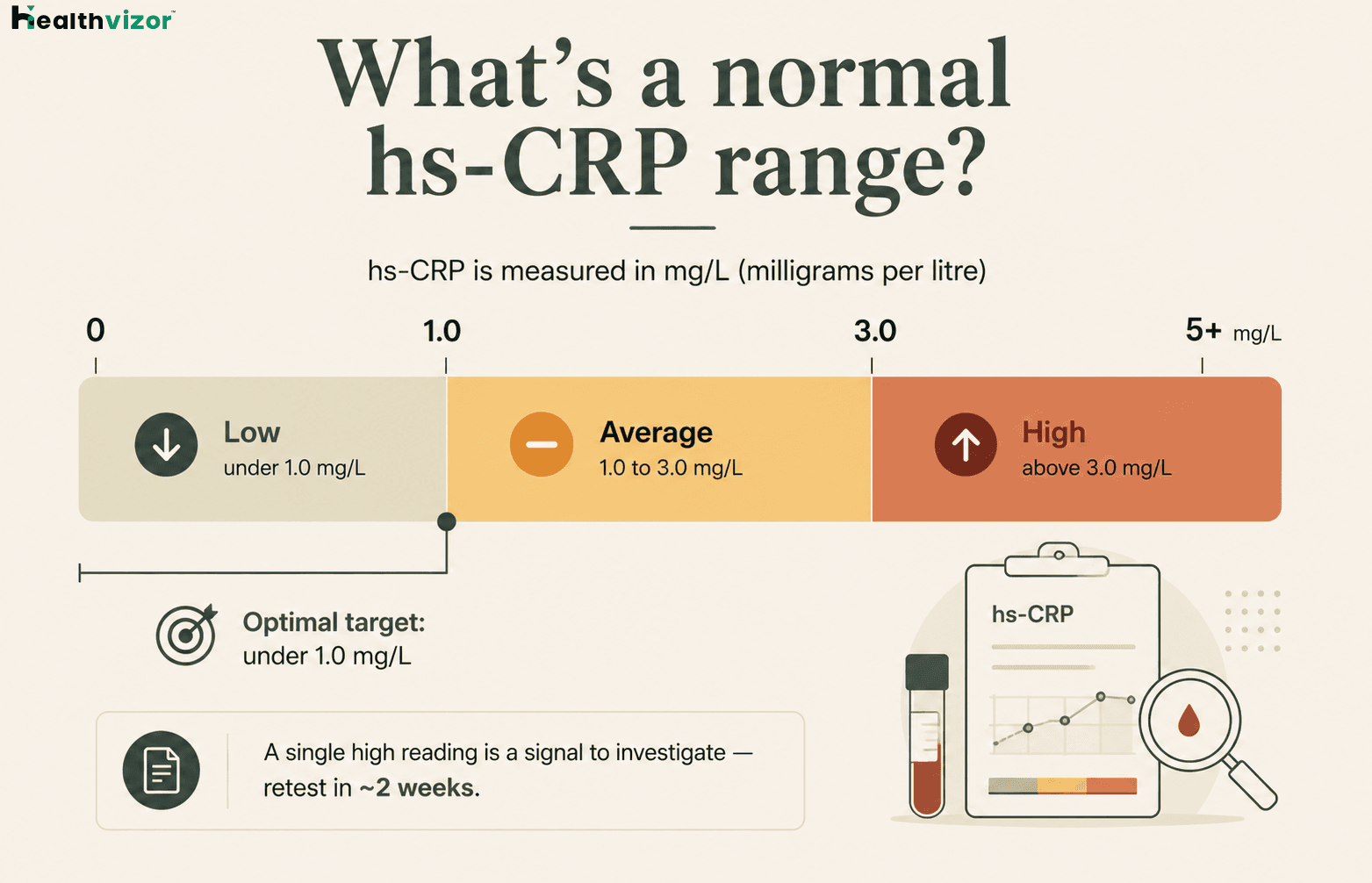
Optimal-range thinking aims lower still, closer to under 1.0 mg/L for prevention. A single reading above 3.0 is a signal worth investigating, not a verdict to manage forever. And because the older, standard CRP test is too coarse to catch low-grade inflammation, this is an inflammation test most Indian panels still skip, even though it's inexpensive and easy to add.
The proof: inflammation is a driver, not a bystander
Two landmark trials moved hs-CRP from "interesting number" to "treatable target."
In the JUPITER trial (2008), researchers studied nearly 18,000 people whose cholesterol looked normal but whose inflammation was elevated. Half got a statin, half a placebo. The statin group had a 44% drop in major cardiovascular events [1]. The lesson: people whose cholesterol looked fine but whose inflammation was high carried real, treatable cardiovascular risk that a standard lipid panel missed completely.
The CANTOS trial (2017) went further. Patients who'd already had a heart attack were given either an anti-inflammatory drug or a placebo. Crucially, the drug did nothing to cholesterol, it only lowered inflammation. The treated group still had a 15% lower rate of repeat cardiovascular events [2]. For the first time in humans, lowering cardiovascular inflammation by itself was shown to reduce heart risk.
Together, these trials rewrote how cardiology thinks about prevention. Inflammation isn't just along for the ride. It's a driver.
It's not only a heart story
Metabolism. Visceral fat, the fat around your organs, actively pumps out inflammatory signals (including the messenger IL-6, which triggers CRP). Persistently high hs-CRP tracks closely with insulin resistance and fatty liver. Often it's the first sign the metabolic slide has begun.
Mood and brain. Elevated hs-CRP is linked to depression, harder-to-treat depression and cognitive decline. These are associations rather than proven cause, but inflammation does reach the brain and change how it works. The brain fog and the lab number often share a root.
Recovery. A stubbornly high hs-CRP despite good training, sleep and food usually means something is keeping the immune system switched on. It provides useful context when read alongside your symptoms, training load and sleep.
The Indian context. Indians develop metabolic disease at lower BMI than many Western populations. One reason is higher visceral fat and chronic, low-grade inflammation even when someone looks "not overweight." Widespread vitamin D deficiency (vitamin D is mildly anti-inflammatory), heavy urban air pollution, and rising intake of ultra-processed foods and refined carbohydrates all add to the load. The American Heart Association's 2018 statement on cardiovascular disease in South Asians specifically names chronic inflammation as a contributor to early heart events in this group [3].
This doesn't make high hs-CRP "normal for Indians." It makes it common, which means the levers to lower it matter more here, not less.
If your hs-CRP comes back high
First, rule out a temporary spike. A recent cold, a vaccination, an autoimmune flare or even a hard workout in the previous 48 hours can push hs-CRP up. One high reading on its own means little, retest in about two weeks, once any illness has fully cleared, before drawing conclusions.
If it's genuinely and persistently elevated, the levers that move it most are not fancy:
- Lose visceral fat. Diet, strength training and sleep matter more here than cardio alone.
- Fix your sleep. Poor, disrupted sleep, insomnia especially, is one of the most reliable drivers of inflammation.
- Shift your diet. A Mediterranean-style pattern (fibre, fish, olive oil, colourful plants, little ultra-processed food) has the most consistent evidence of any diet for lowering hs-CRP.
- Move regularly. Moderate, consistent activity beats occasional intensity.
But if you're doing all of that and the number won't budge, the cause is usually hiding somewhere most people never check.
The hidden drivers most people miss
When hs-CRP stays high despite a clean diet and steady training, the cause is almost always one of a few unglamorous suspects:
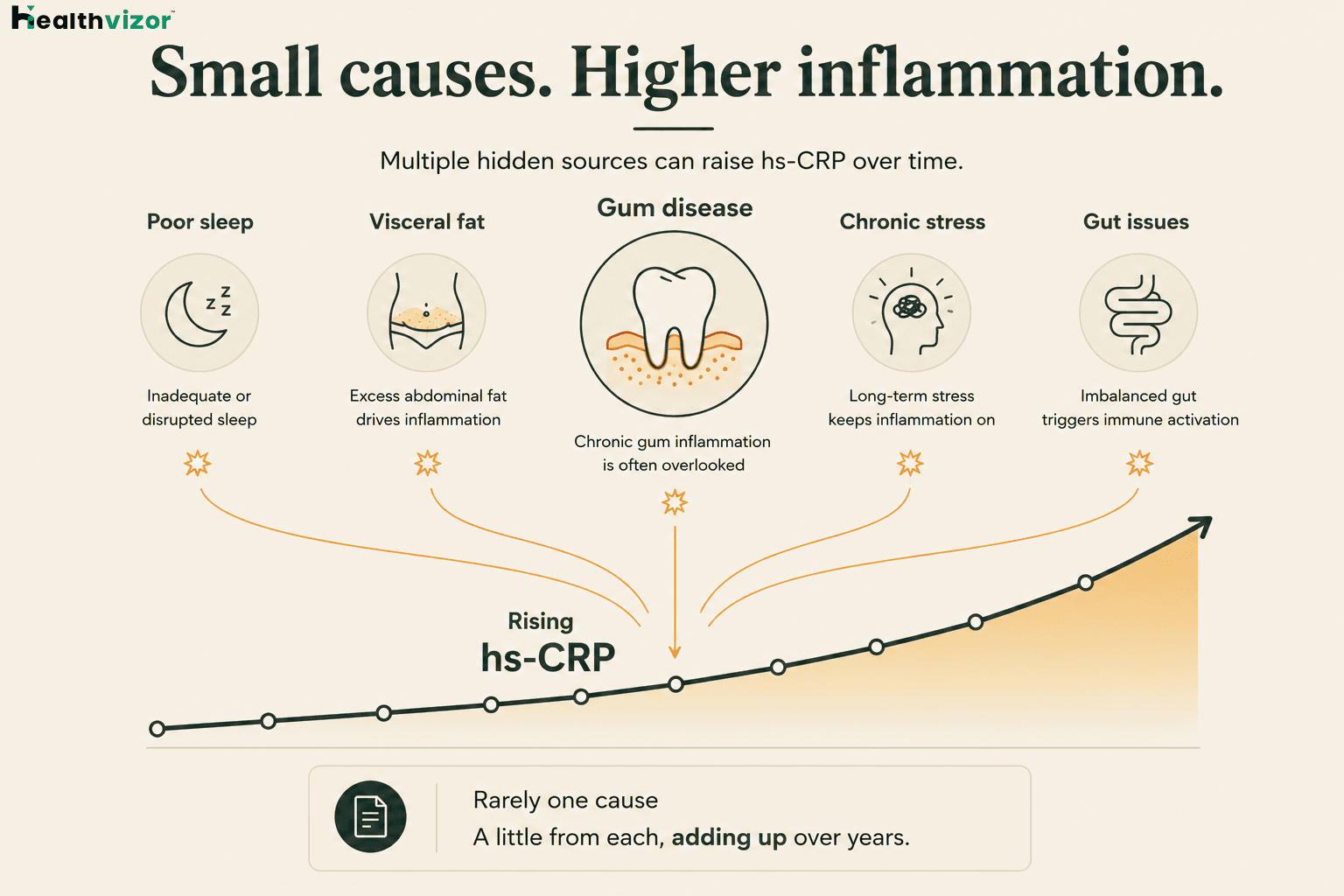
- Poor oral health. Chronic gum disease is one of the most overlooked causes of persistent inflammation. Many people spend thousands on supplements while ignoring the inflammation they're carrying in their mouth. The mouth is one of the body's largest immune interfaces, and untreated gum disease drips inflammation into the bloodstream every day.
- Sleep apnoea. Often undiagnosed, even in lean people. If you snore or wake unrefreshed, a sleep study is worth it.
- Gut issues and food intolerances. Low-grade gut inflammation quietly feeds systemic hs-CRP.
- Quiet autoimmune activity. Thyroid antibodies (Hashimoto's), psoriasis-spectrum issues or undiagnosed coeliac can simmer for years.
- Chronic stress. Sustained cortisol keeps inflammation switched on. The fix isn't a supplement, it's genuine nervous-system recovery.
Think of chronic inflammation as death by a thousand paper cuts. Poor sleep. Visceral fat. Gum disease. Chronic stress. A little from each, adding up over years. The win comes from finding the biggest one and dealing with it specifically, not from another anti-inflammatory tea.
How Healthvizor helps
Measuring hs-CRP is easy. Understanding it is the hard part, and that's the part that matters.
Healthvizor doesn't look at hs-CRP in isolation. It asks the next question: why is it high?
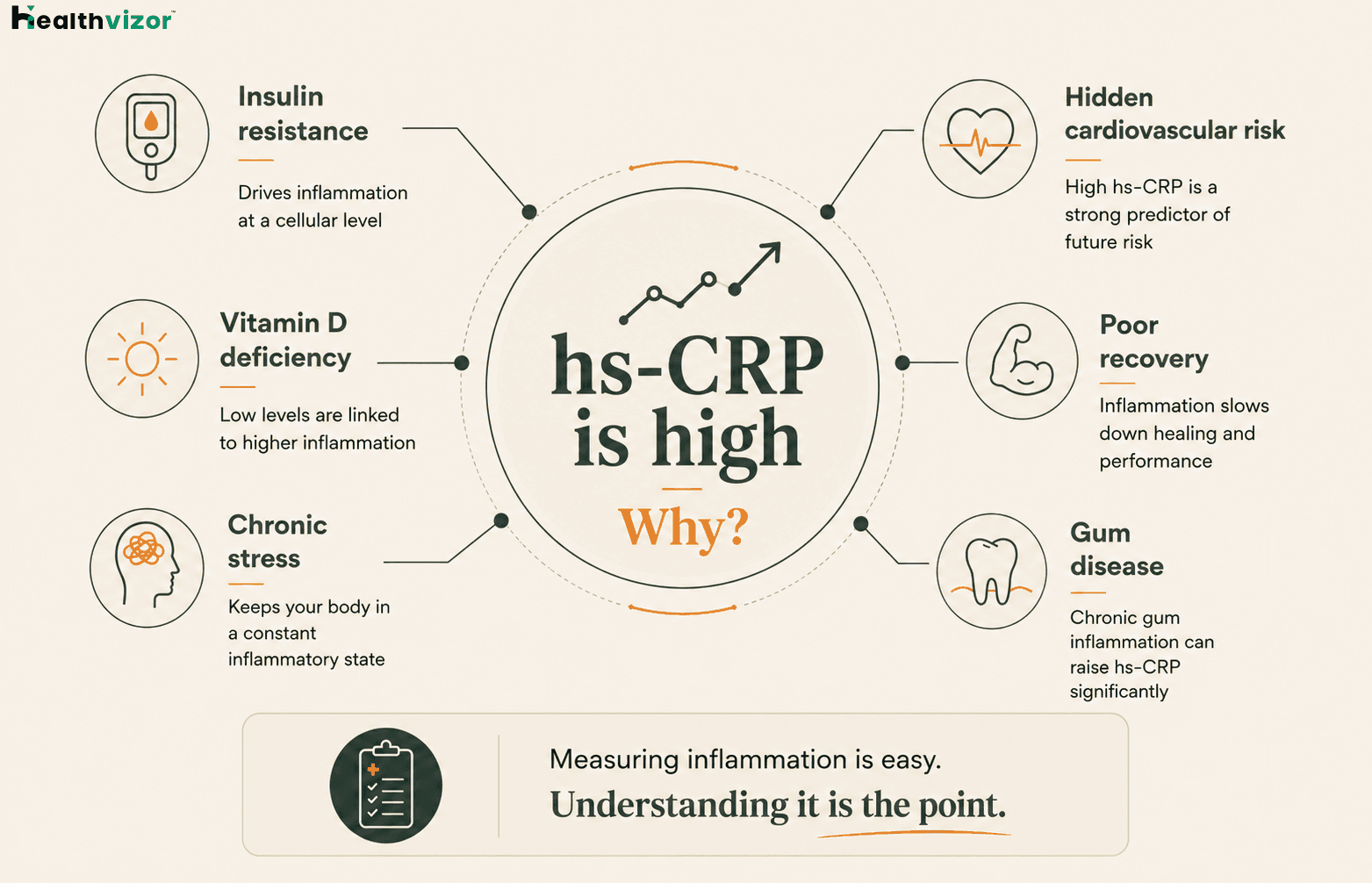
Is it insulin resistance? Hidden cardiovascular risk? Vitamin D deficiency? Poor recovery? Chronic stress? Gum disease?
Your hs-CRP is read alongside fasting insulin, ApoB, vitamin D, ferritin, homocysteine and your full lipids, and against an optimal range rather than the broad "normal" band, so the result points to a cause you can actually act on. That's the difference between simply measuring inflammation and actually understanding it.
Frequently Asked Questions
Under 1.0 mg/L is considered low cardiovascular risk, and this is the range most optimal-health thinking aims for. 1.0 to 3.0 mg/L is average risk. Anything above 3.0 mg/L is high risk and worth investigating further, ideally alongside other markers rather than in isolation.
Not on its own. A recent cold, a vaccine, an autoimmune flare or even an intense workout in the last two days can temporarily push hs-CRP up. A single high result is a reason to retest in about two weeks once you're fully recovered, not a reason to panic.
There's no fixed timeline, it depends on the underlying cause. Losing visceral fat, fixing sleep and shifting to a Mediterranean-style diet can show measurable change in a few months for many people. But if hs-CRP stays high despite these changes, it usually points to something specific, like gum disease, sleep apnoea or gut issues, that needs to be addressed directly rather than waited out.
No. A high hs-CRP means there's inflammation somewhere in the body, not necessarily in the heart. It's a risk marker, not a diagnosis. That's why it's most useful when read alongside other markers like ApoB, fasting insulin and your lipid panel, rather than as a standalone number.